
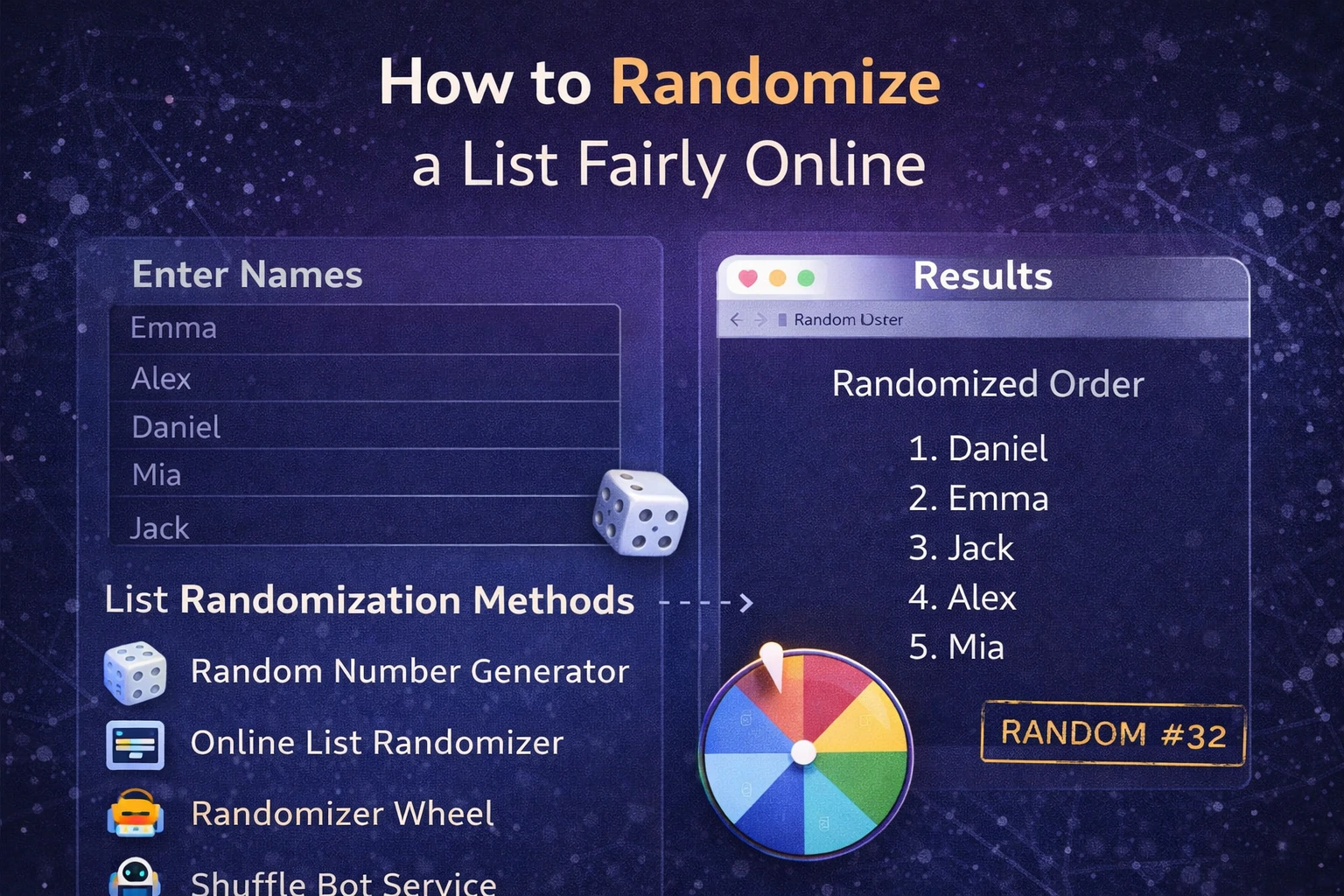
When people say they want to randomize a list, they usually mean more than “make it look different.” They mean:
no one should be unfairly favored
the order should be hard to manipulate
the result should be easy to explain if someone asks how it was generated
That matters a lot when the list controls something real:
giveaway entries
candidate order
review queues
test execution order
classroom or team rotation
If the method feels sloppy, the result loses trust immediately.
Fair randomization is not the same as “mixed enough”
A fair shuffle means every line has the same chance to appear in every position. That is stronger than simply getting an output that looks shuffled to the eye.
A lot of manual workflows create the illusion of randomness without delivering consistent fairness. People:
sort by a weak temporary field in a spreadsheet
copy rows around manually
remove duplicates badly
leave empty lines or formatting noise in the input
The list changes, but the process is not something you would want to defend if the output is questioned.
Use one item per line and shuffle the full set
Use Randomize Lines when each entry is on its own line and you want a clean randomized order.
That format is useful because it maps well to real inputs:
names
emails
ticket IDs
playlist items
questions
test cases
The cleaner the input, the easier it is to defend the output.
Good use cases where fairness matters
Fair shuffling is useful when you need a full reordered list, not just a few winners. Typical cases include:
ordering support tickets for balanced review
rotating team tasks
changing quiz order to reduce memorized patterns
shuffling candidate review order
mixing test data before manual QA
In all of these cases, the value is not just randomness. It is the removal of obvious bias from the order itself.
What usually goes wrong
The bad results usually come from process mistakes, not from the concept of shuffling.
Common mistakes:
hidden blank lines create output that looks broken
duplicates remain in the list and distort expectations
people take only the top few rows without first deciding whether they need a full shuffle or a random sample
the method changes every time, so nobody can explain why one result should be trusted more than another
If the result affects fairness, reproducibility, or team trust, consistency matters almost as much as randomness.
Practical example: giveaway entry order
Imagine you have 200 entries and want a fair order before selecting winners. A proper full shuffle means any entry could land at the top, middle, or bottom without structural bias.
That is much easier to defend than:
dragging rows manually
sorting by a field that was not actually randomized
copying the list into a spreadsheet and improvising the selection
The same thinking applies to internal workflows too. If a team rotates code reviews or support cases, a fair randomized order prevents the same people from always being first or last through accidental process bias.
Fairness also means choosing the right operation
Sometimes people ask for a “shuffle” when what they really want is:
a random sample of 5 winners
a deduplicated set
a reproducible seeded order
Those are different jobs.
Use a full shuffle when you need all items kept in a new order. If you only need a subset, sampling is the better model. If you need the same randomized order later, use a seeded workflow instead.
How to keep the process defensible
If the output matters, keep the workflow simple:
clean the input
remove accidental blank lines
confirm each item is on its own line
run one consistent shuffle method
keep the final output as the record of the result
That is how you avoid arguments later about whether the order was manipulated or generated sloppily.
What to do next
If you need the same random order again later, read the seeded shuffle guide next. If you only need a subset of entries rather than a full reordered list, continue with the sampling guide.
Admin User
Author